
Join us on the Community Forums!
-
Community Guidelines
The Fitbit Community is a gathering place for real people who wish to exchange ideas, solutions, tips, techniques, and insight about the Fitbit products and services they love. By joining our Community, you agree to uphold these guidelines, so please take a moment to look them over. -
Learn the Basics
Check out our Frequently Asked Questions page for information on Community features, and tips to make the most of your time here. -
Join the Community!
Join an existing conversation, or start a new thread to ask your question. Creating your account is completely free, and takes about a minute.
Not finding your answer on the Community Forums?
- Community
- Developers
- Web API Development
- Pretty sure he is asking the dev community what th...
- Mark Topic as New
- Mark Topic as Read
- Float this Topic for Current User
- Bookmark
- Subscribe
- Mute
- Printer Friendly Page
- Community
- Developers
- Web API Development
- Pretty sure he is asking the dev community what th...
Seeking input from Fitbit.NET users re: OAuth 2.0 breaking changes
- Mark Topic as New
- Mark Topic as Read
- Float this Topic for Current User
- Bookmark
- Subscribe
- Mute
- Printer Friendly Page

Seeking comments on how we handle transitioning from OAuth 1.0A to 2.0 in your .NET client code.
https://github.com/aarondcoleman/Fitbit.NET/issues/46
--Aaron
 Using Fitbits in Research? Check out Fitabase --www.fitabase.com


 Community Moderator Alumni are previous members of the Moderation Team, which ensures conversations are friendly, factual, and on-topic. Moderators are here to answer questions, escalate bugs, and make sure your voice is heard by the larger Fitbit team. Learn more
Hello there @aarondcoleman! In order to better assist you, can you please clarify this! Looking forward to your reply!

 Best Answer
SunsetRunner
Pretty sure he is asking the dev community what they want for migrating from OAuth 1.0 to OAuth 2.0 in the Fitbit.Net framework he does...pretty straight forward.
Best Answer
That's correct.
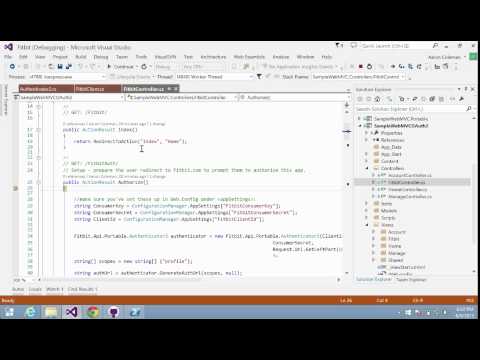
As an update, I have posted a video walkthrough of where we are with the new 2.0 version of the Fitbit.NET library and there's plenty of room for some constructive feedback. Again note, we're proposing some pretty big breaking changes for a 2.0, once finalized will become what is maintained going forward. The previous version will exist but not be further maintained.
Explination of new changes for OAuth 2.0 here:
Current branch:
https://github.com/aarondcoleman/Fitbit.NET/tree/async-portable
Using Fitbits in Research? Check out Fitabase --www.fitabase.com
 Best Answer
Has anyone found an example of the Fitbit with OAuth 2.0 working in webforms. I was able to do this without any issues in the version with OAuth 1.0, however, the OAuth 2.0 version I'm having issues with.
If there is an example, can someone post it. I know there is an MVC example, but I need a Webforms example.
Best Answer
Is this library still maintained? I’ve tried following the video and the sample projects but can’t get it to work for me
Best Answer